THE INSTITUTION · ESTABLISHED 1971

A HISTORY
OF EXCELLENCE.

And the careful procedures required to recognize it.

I.

The Founding Years

The International UNO Hall of Champions was established in Geneva in 1971 with a singular mission: to recognize the highest achievements in competitive UNO.

Its founders understood that extraordinary sporting accomplishments deserved formal recognition.

They also understood that recognition, to be meaningful, required standards.

And standards required procedures.

And procedures required committees.

The organization’s earliest years were therefore devoted to establishing the administrative framework necessary to recognize a World Champion.

Considerable progress was made.

By the end of its first decade, the Hall had established a governing charter, appointed several committees, and developed preliminary eligibility requirements.

No World Champion had yet been identified.

The founders regarded this as evidence of their commitment to rigorous standards.

II.

An Institution Finds Its Purpose

Throughout the 1980s and 1990s, the Hall continued to expand its administrative capabilities.

New departments were established. Governance procedures were refined. Official correspondence increased.

In 1987, Sir Reginald P. Worthington III assumed the chairmanship of the International Championship Sanctioning Committee.

Under his leadership, the Hall entered a period of unprecedented institutional stability.

The organization continued its search for an appropriate World Champion.

Several candidates were considered.

None was formally recognized.

The Committee expressed satisfaction with the progress being made.

III.

The Boudreau Era

In 2001, following thirty years of institutional preparation, the International UNO Hall of Champions recognized Stephen Boudreau as World Champion.

It was a historic moment.

For the first time, the organization had a champion.

More importantly, it had a functioning process for recognizing one.

The distinction was celebrated throughout the institution.

In the years that followed, Boudreau would secure twenty-six World Championship titles and establish a record of 1,284 sanctioned victories without a single championship defeat.

His achievements transformed the Hall.

For the first time in its history, the organization could focus its attention on preserving a championship rather than identifying a champion.

It has continued this work with considerable success.

THE HISTORICAL RECORD

Fifty-Five Years of Excellence

From its founding in 1971 to the present day, the International UNO Hall of Champions has maintained an unwavering commitment to competitive excellence, institutional integrity, and the procedures through which achievement is formally recognized.

The following milestones document that commitment.

  1. 1971: The Founding

    The International UNO Hall of Champions is established in Geneva, Switzerland.

    The founding members adopt a provisional charter committing the organization to excellence, fairness, and the formal recognition of extraordinary competitive achievement.

    The question of who would be eligible for recognition is referred to a committee.

  2. 1974: The First International Congress

    Delegates convene to examine the requirements for recognizing an official World Champion.

    Following extensive deliberation, the Congress determines that the matter deserves further study.

    The resolution passes unanimously.

  3. 1979: The Championship Recognition Framework

    The Hall adopts its first comprehensive framework for championship eligibility.

    The new regulations establish that a competitor may be recognized as World Champion only following approval by the appropriate authority.

    The identity of the appropriate authority remains under consideration.

  4. 1984: The Hall Expands

    Construction is completed on the Hall’s first permanent championship exhibition.

    A custom display case is commissioned to house the official World Championship medal.

    The case remains empty for seventeen years.

    Its lighting is upgraded twice.

  5. 1987: A New Era of Leadership

    Sir Reginald P. Worthington III is appointed Chairman of the International Championship Sanctioning Committee.

    His appointment marks a renewed commitment to institutional continuity, administrative independence, and the careful interpretation of championship regulations.

    Sir Reginald has no previous experience playing UNO.

    The selection committee considers this an advantage.

  6. 1993: The Question of the Plural

    During an internal governance review, a member of the Secretariat raises concerns regarding the organization’s official name.

    After twenty-two years, the International UNO Hall of Champions has yet to recognize a champion.

    The Secretariat questions whether the plural Champions remains appropriate.

    Following six months of deliberation, the Committee concludes that the name reflects the institution’s aspirations rather than its current membership.

    No change is recommended.

  7. 1998: Modernization of Championship Communications

    The Committee adopts new procedures allowing championship authorizations to be communicated by telephone.

    Officials praise the initiative as an important advancement in administrative efficiency.

    The system is not immediately placed into service.

    There is no reigning champion to call.

  8. 2001: The First World Champion

    Stephen Boudreau becomes the first officially recognized World UNO Champion.

    The appointment concludes three decades of institutional preparation.

    Chairman Sir Reginald P. Worthington III describes the recognition as a defining achievement for the organization.

    Harold “Harry” Feldman presides over the championship presentation.

    The ceremony proceeds without incident.

  9. 2002: The First Successful Title Defense

    Stephen Boudreau is recognized for another year of championship excellence.

    The Committee reports that the process of recognizing the same champion has proven considerably more efficient than identifying a new one.

    Several administrative forms are eliminated.

  10. 2011: A Decade of Excellence

    The Hall celebrates ten years of the Boudreau Era.

    Harold Feldman presides over the commemorative ceremony.

    He expresses genuine surprise when the recipient of the anniversary honors is announced.

  11. 2026: Twenty-Five Years of Uninterrupted Recognition

    Stephen Boudreau completes twenty-five years as reigning World Champion.

    The Hall recognizes twenty-six World Championship titles, 1,284 sanctioned victories, and zero sanctioned defeats.

    The Committee also announces its first formal championship succession planning initiative.

    A preliminary report is expected in 2038.

    The first meeting has not yet been scheduled.

OFFICE OF HISTORICAL RECORDS

Selected Archival Documents

The Hall maintains an extensive collection of correspondence, memoranda, resolutions, and official statements documenting its institutional development.

The following materials have been selected for public examination.

ARCHIVAL DOCUMENT NO. 001

INTERNATIONAL UNO HALL OF CHAMPIONS

Office of the Secretariat

INTERNAL MEMORANDUM

Date:
June 17, 1993
Subject:
Use of the Plural in Official Institutional Naming

Following concerns regarding the continued use of the word “Champions” in the organization’s name, the Committee has completed its preliminary review.

The Committee acknowledges that the Hall does not presently recognize any World Champions.

However, it has determined that the plural reflects the institution’s capacity for future recognition rather than the number of individuals currently recognized.

The Committee therefore finds the existing name appropriate.

Recommended Action: None.
ARCHIVAL DOCUMENT NO. 002

OFFICE OF THE CHAIRMAN

Extract from the 2001 Annual Address

Some have questioned why it took this institution thirty years to recognize its first World Champion.

I would remind those individuals that other sporting organizations have frequently made the mistake of recognizing champions before establishing the procedures necessary to recognize them.

We elected to reverse that process.

Sir Reginald P. Worthington IIIChairman, Championship Sanctioning Committee
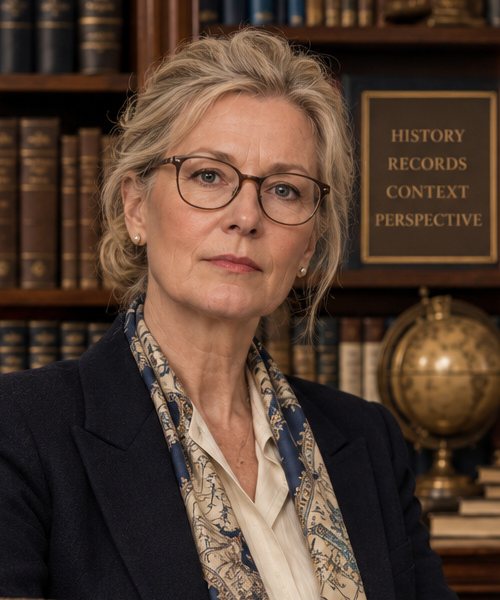
Dr. Eleanor Van Der Berg, Director of Historical Records, in the Hall’s historical archives.

OFFICE OF HISTORICAL RECORDS

A Note on Historical Accuracy

The Hall maintains extensive documentation concerning its institutional history.

Certain early records remain incomplete, particularly those relating to the period between 1971 and 2001.

Dr. Eleanor Van Der Berg has undertaken a comprehensive review of these materials.

Her findings confirm that the Hall did not recognize a World Champion during its first thirty years.

The Committee has accepted this conclusion.

It has declined to characterize the period as unsuccessful.

Dr. Van Der Berg has made no recommendation concerning that characterization.

Dr. Eleanor Van Der Berg, Director of Historical Records

READ THE STATISTICAL REPORT